
Sir John Ritblat's net worth is most commonly estimated at around £180 million, based on figures reported by the Evening Standard. That said, property-focused rich list trackers like Estates Gazette have historically produced lower component-based figures, placing the Ritblat family's combined wealth closer to £100 million to £152 million at various points in the 2000s and 2010s. As of May 2026, there is no freshly published authoritative estimate, so the honest working range sits somewhere between £100 million and £200 million, with £150 million to £180 million being the most defensible midpoint based on available data.
Sir John Ritblat Net Worth Estimate: Sources and Breakdown

Marcus Delany
21 May 2026
Who Sir John Ritblat Is and Why People Look Up His Wealth

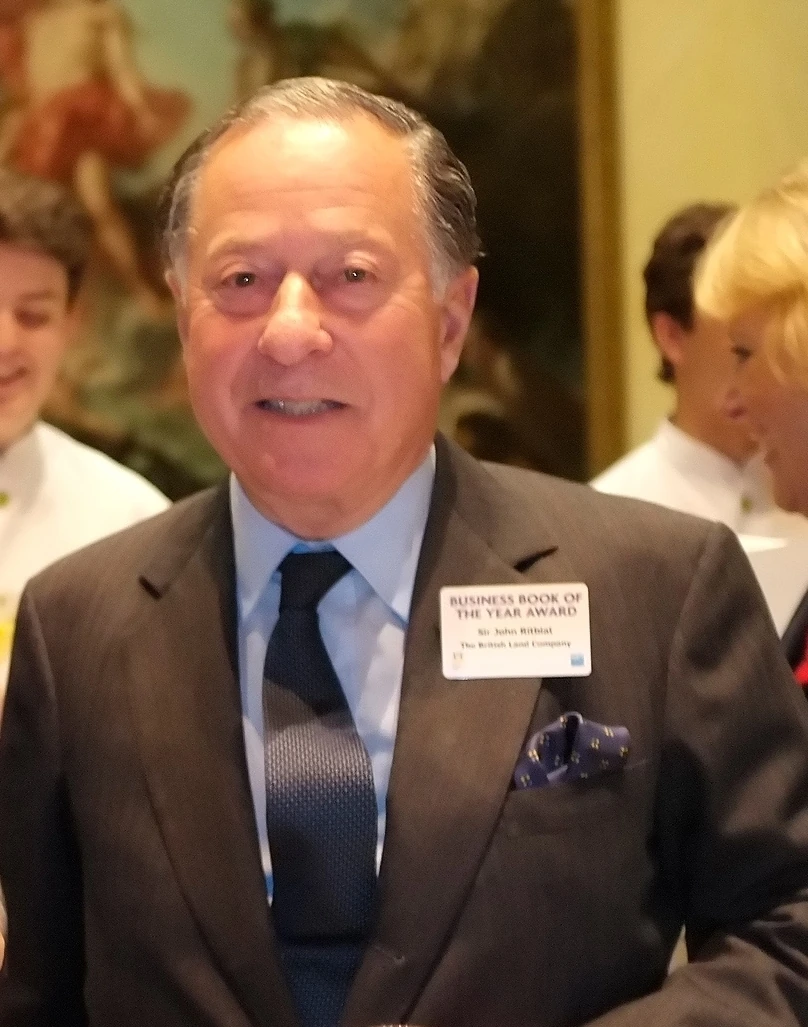
Sir John Henry Ritblat, born 3 October 1935, is an English property developer and philanthropist who spent the better part of four decades building British Land into one of the UK's largest real estate investment trusts. He joined British Land in 1970 and served as its chairman and chief executive for more than 35 years, effectively becoming the face of UK commercial property during a long stretch of the late 20th century. He was knighted in the Queen's New Year Honours list for 2006, the same year he stepped down from British Land. Outside of business, he has been a prominent arts patron, including serving as chairman of trustees of the Wallace Collection in London.
People search for his net worth for a few different reasons. People may also be looking for Connor Ratliff net worth when they come across the name in online lists and discussions. Some are curious about how wealthy the old guard of UK property actually got. Others come across the name in news stories, such as a widely reported 2018 burglary at his home in which 47 rare watches were stolen, and want context on who he is. And some are comparing the wealth of UK business figures more broadly. His name sometimes appears alongside other prominent British business figures, and for readers tracking the net worth of major UK industrialists, Ritblat is a useful reference point.
The Current Best Estimate of Sir John Ritblat's Net Worth
The most cited single figure is £180 million, sourced from the Evening Standard. That figure reflects an estimate made in the context of reporting on Sir John Ritblat as an influential businessman and property developer, and it remains the most widely referenced number in general media coverage. Estates Gazette, which tracks UK property wealth specifically, has published a range of figures at different points.
| Source | Estimate / Figure | Year / Context |
|---|---|---|
| Evening Standard | £180 million (personal net worth) | Reported in general news coverage |
| Estates Gazette Rich List 2010 | £152 million (Sir John Ritblat & Family) | 2010 Rich List entry; 2009 figure cited as £90 million |
| Estates Gazette Rich List 2004 | ~£63 million (combined asset sum) | Conservative component total including British Land stake and other assets |
| Estates Gazette (component analysis) | £11.3m (British Land stake) + £16m (Delancey family stake) | Breakdown from stake-value analysis; does not include all assets |
Reading those numbers together, it is clear that Ritblat's wealth grew substantially during the early 2000s property boom, peaked around the mid-2000s as British Land share prices surged, and then came down when he sold the bulk of his stake and markets corrected. The £180 million figure is likely the most recent widely cited estimate and is probably still in the right ballpark for 2026, though it should be treated as an approximation rather than a current audited figure.
How Net Worth Estimates Like This One Are Actually Built

Net worth estimates for private individuals like Sir John Ritblat are never an exact science. There is no public balance sheet. What estimators do instead is add up every known or estimable asset, subtract any known liabilities, and arrive at a range. For Ritblat specifically, the key inputs have been his shareholding in British Land (trackable via London Stock Exchange regulatory disclosures), his family's stake in Delancey, proceeds from documented share sales, property holdings, and any other disclosed assets.
The British Land share sale in February 2006 is one of the most directly documented data points. Investegate records a notification from 21 February 2006 in which the John Ritblat Charitable Trust No 1 sold 40,000 shares at £11.98 each and 38,000 shares at £11.95 each. Separately, Estates Gazette reported that his total proceeds from British Land share sales around that time came to approximately £56.6 million to £57 million. Those are hard numbers that feed directly into any credible estimate. The remainder of the wealth calculation relies on less transparent data points: estimated property values, private investment returns, and charitable trust assets that are partially visible through Charity Commission filings.
Rich list compilers, including those at Estates Gazette and the Sunday Times, typically apply a similar methodology: start with known equity stakes in public companies (valued at current share price), estimate private company interests based on book value or comparable transactions, add real estate holdings where known, and use public records like Companies House director filings and charity accounts to fill in gaps. For identity-variant checks, you can verify Companies House records by searching the person’s name on GOV.
UK’s Companies House Find and update portal and reviewing relevant officer and beneficial ownership information Companies House director filings). The academic literature on Rich List methodology (including peer-reviewed work published in journals like Socio-Economic Review) makes clear that these figures tend to undercount private wealth held in trusts or complex offshore structures.
For Ritblat, the existence of named charitable vehicles like The Sir John Ritblat Family Foundation means some wealth has been formally moved into structured philanthropy, which complicates a straight personal net worth figure.
Where the Money Likely Comes From
British Land is the obvious starting point. Ritblat took control of a relatively modest property company in 1970 and transformed it into a FTSE 100 real estate investment trust with a portfolio spanning major London offices and retail properties. Over those decades, he accumulated a significant personal shareholding and received substantial compensation. When he stepped down in 2006, he sold most of his British Land stake and pocketed around £57 million from that transaction alone. That is a single documented liquidity event, not a total career earnings figure.
- British Land equity: Built over decades of leadership, partially liquidated in 2006 for approximately £57 million in documented proceeds
- Delancey stake: Estates Gazette reported a family stake in Delancey (the private property and investment company) valued at around £16 million at one point
- Direct property holdings: As a long-term property developer, Ritblat is believed to hold direct real estate assets beyond his listed company stakes, though these are harder to value precisely
- Art collection: Multiple rich list entries have referenced a significant art collection as part of his asset base; Ritblat's connection to the Wallace Collection underlines his engagement with fine art at an institutional level
- Charitable structures: The Sir John Ritblat Family Foundation holds assets with its own published accounts at the Charity Commission, representing wealth formally committed to philanthropic purposes
- Investment portfolio: Like most individuals of significant wealth, he is likely to hold a diversified portfolio of financial investments, though these are not publicly disclosed
One data point worth flagging comes from a Wikipedia article on Royal Mint Court, which references British Land documents reportedly showing that John Ritblat received 2 million shares at cost from the Quantum Fund. That kind of arrangement, if accurate, would suggest he had additional routes for accumulating equity beyond standard director grants. However, this should be treated as a research lead rather than a confirmed fact and verified against the underlying British Land filings directly.
Why the Number Has Changed and Could Change Again

The trajectory of Ritblat's wealth tells a fairly clear story. In the early 2000s, rising UK commercial property values pushed British Land's share price higher, inflating the value of his stake significantly. By 2004, his British Land stake alone was estimated at around £23 million, and his combined wealth was placed at roughly £63 million by Estates Gazette. By 2006, British Land shares had climbed further, and the proceeds from his stake sale came to around £57 million. By 2010, Estates Gazette placed his family wealth at £152 million. The 2009 figure in the same source was only £90 million, reflecting how much the financial crisis and property market collapse had dragged on valuations even for liquid assets.
Going forward, several factors could move the estimate meaningfully in either direction. At 90 years old in October 2025, Sir John Ritblat is at a life stage where estate planning, philanthropy, and asset transfers become increasingly significant. Wealth can shift out of personal ownership into trusts, foundations, or family structures without showing up in media estimates. UK property market conditions also matter if he retains direct real estate holdings: prime London commercial and residential property has experienced significant volatility since 2020. Any investment portfolio tied to public equities would reflect broader market movements. And if any of his private company interests (including Delancey-related holdings) are sold or restructured, that could produce a documented liquidity event that updates the picture substantially.
This is worth keeping in mind when comparing Ritblat's wealth to other prominent UK business figures. Someone like Jim Ratcliffe, who built INEOS and whose net worth has been tracked well into the billions, represents a different scale and a different era of wealth accumulation. Jim Ratcliffe net worth is often tracked in a similar way, but his wealth is typically reported in the billions rather than the hundreds of millions. Ritblat's wealth is more characteristic of the earlier generation of UK property developers, substantial by any normal measure but operating in a different league from the post-2000 wave of ultra-high-net-worth entrepreneurs.
How to Check This for Yourself and Interpret What You Find
If you want to go beyond the reported estimates and get closer to primary data, there are several concrete places to look. None of them will give you a single definitive number, but together they paint a much clearer picture than any one media estimate.
- Companies House (gov.uk): Search for 'John Henry Ritblat' or the variant 'John Henry Sir John Ritblat' to find his director and officer history, any person of significant control (PSC) filings, and linked companies. This is the most reliable public record for mapping corporate connections.
- Charity Commission (gov.uk): Search for 'Sir John Ritblat Family Foundation' (registered charity number 262463) to access annual accounts, trustees, and financial summaries. This gives you a window into the philanthropic side of the wealth picture.
- London Stock Exchange regulatory news and Investegate: Search for 'Ritblat' in historical regulatory filings to find director shareholding notifications from the British Land years. The February 2006 filings in particular are well-documented and confirm the share sale proceeds.
- British Land annual reports (available on the British Land corporate site and via archive services): The 2006 annual report specifically contains director interest tables and option exercise disclosures that are the primary source for the £57 million figure.
- Estates Gazette and Sunday Times Rich List archives: These are secondary sources but they provide year-on-year snapshots that are useful for understanding how the estimate has moved over time.
- UK Land Registry (via gov.uk): If you want to check known property holdings, searches by name or company name can surface registered titles, though not all holdings are easily findable and some may be held through corporate structures.
When you read any net worth figure for a private individual, the most important habit is to ask what assets are actually being counted and what the cut-off date is. Forbes, for example, explicitly bases its billionaire list on a defined snapshot date using live market prices. Rich list figures for private individuals like Ritblat are less precise because private company stakes, art, and property are valued using comparable sales or book values rather than real-time market prices.
The figures for Sir John Ritblat that appear across media sources range from around £63 million to £180 million depending on the year, the methodology, and whether the estimate counts only personal assets or includes family trust structures. Treating the £150 million to £180 million range as a reasonable current working estimate while acknowledging the uncertainty is the most honest approach.
FAQ
Is £180 million Sir John Ritblat net worth a current, audited figure or just an estimate?
It is an estimate, not a fresh audited statement. The article explains that as of May 2026 there is no newly published authoritative figure, so the widely repeated £180 million should be treated as an approximation based on older reported valuations and market movements.
Why do different trackers show such wide ranges for sir john ritblat net worth (for example, £100m to £200m)?
The spread largely comes from methodology differences. Some sources emphasize public-share holdings and liquid proceeds, while others attempt to value private interests, property, and trust-held assets, which can be undercounted or valued using book value or comparable transactions.
Does the net worth number include money held in the charitable trusts or family foundations?
Often it is unclear in media rich lists. Because wealth may be held through charitable vehicles, some compilations treat that as family wealth while others focus on assets personally owned, so identical underlying wealth can produce different headline numbers depending on inclusion rules.
What is the most “verifiable” data point mentioned for estimating his wealth?
The February 2006 British Land share sale is the most directly documented input described in the article. It includes a specific notification with share counts and prices, and Estates Gazette reporting of total proceeds around that period, which feeds many estimates.
How should I interpret the mention of 2 million British Land shares “at cost” in the Quantum Fund reference?
Treat it as a research lead, not confirmed fact. The article notes it is referenced via a Wikipedia claim tied to British Land documents, and it recommends verifying against the underlying filings before using it to update any net worth view.
If I want to estimate sir john ritblat net worth myself, what assets should I focus on first?
Start with his British Land shareholding and any disclosed stake changes from regulatory disclosures, then add any other disclosed public holdings. After that, you can attempt to model property and private investments, but those parts are most sensitive to valuation assumptions and may rely on estimates rather than real-time pricing.
Could his net worth change dramatically even if markets are flat?
Yes. The article highlights that transfers into trusts, foundation structures, and estate-planning moves can shift ownership without creating big news, and later liquidity events such as private stake sales or restructurings can materially change valuations even when broad markets do not.
What common mistake do people make when comparing his net worth to modern billionaire figures?
Mixing apples and oranges by scale and era. The article notes that Ritblat’s wealth is typically in the hundreds of millions, and wealth tracking for private individuals often lacks the real-time pricing precision used for billionaire lists, so direct comparisons can be misleading.
Does the 47 rare watches burglary story affect the net worth estimate?
Not directly. The article includes it as context for why people search his name, but personal loss or reported theft of valuables is not used as an accounting input for net worth models.
Next Article
Connor Ratliff Net Worth: How to Estimate It Reliably
Estimate Connor Ratliff net worth with identity check, income sources, evidence vs rumors, and reliable ranges.