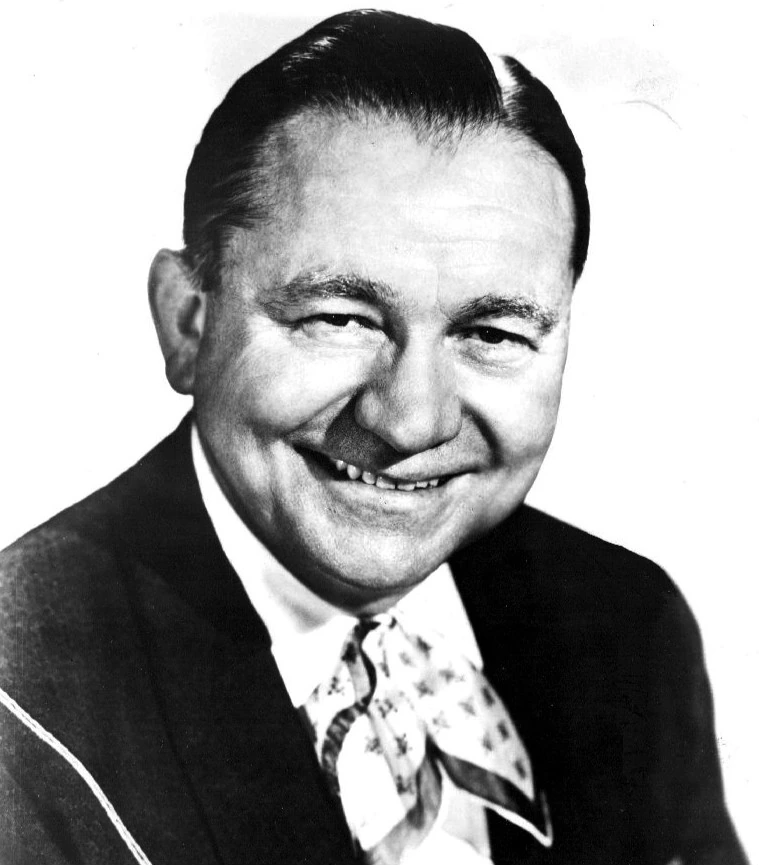
Tex Ritter, born Woodward Maurice Ritter, died in Nashville, Tennessee, at age 68. He left behind one of the longest and most varied careers in American entertainment: western films in the 1930s and 40s, a recording catalog that included the iconic 'High Noon' theme, decades of touring, and a late-career political run for the U.S. Senate. Each of those chapters had a financial dimension, and understanding them is how you arrive at a credible number rather than a recycled guess.
How to estimate net worth at the time of death

Net worth at death is technically the sum of all assets minus all liabilities at the moment someone passes. For a public figure who died in 1974, you rarely get that number handed to you directly. Instead, you reconstruct it from multiple layers of evidence, treating each source as a partial picture that, taken together, gives you a reliable range.
The most rigorous method works like this: start with the broadest confirmed facts (career income streams, known property, public statements about finances), then narrow toward documented records (probate filings, estate tax disclosures, biographical accounts from people who had direct access), and finally apply a confidence rating based on how many independent sources agree. Think of it less like a calculation and more like triangulation. The more data points point to roughly the same range, the more confident you can be.
- List all known income streams across the subject's career and assign realistic annual earnings ranges to each phase.
- Identify known major assets: real estate, vehicles, business interests, publishing rights, recording royalties.
- Search for probate or estate records that may confirm a gross estate value or tax filing.
- Cross-reference with biographical sources, interviews, and contemporary journalism for spending habits, debts, or windfalls.
- Adjust all figures to the year of death to get a consistent baseline, then optionally convert to modern dollars using an inflation calculator.
- Assign a confidence level: high (multiple independent sources agree), medium (one solid source plus corroborating context), or low (inference only).
Sources to check: estate records, probate, biographies, and interviews
The gold standard for any net-worth-at-death question is a probate filing. In the U.S., when someone dies with assets, those assets typically go through a state probate court, and the resulting records, including inventories, appraisals, and distribution documents, become part of the public record. For Tex Ritter, who died in Nashville, that means the Davidson County Probate Court in Tennessee is the first place to look.
Important caveat: an exhaustive search of publicly indexed online databases did not surface a digitized probate case file for Tex Ritter that includes the executor's name, case number, and filing date. That absence does not mean the records don't exist. Court records from 1974 in Tennessee are often only partially digitized, and many docket books from that era require an in-person visit to the court clerk's office or a direct records request. If you want the most precise figure possible, that physical courthouse visit or a records-retrieval service is your most productive next step.
Beyond probate, the following sources are worth checking in roughly this order of reliability:
- Tennessee probate court records (Davidson County Clerk's office, Nashville): the most direct evidence of gross estate value.
- Federal estate tax returns: for estates above the 1974 exemption threshold (then $60,000), these were filed with the IRS, though accessing them typically requires being a direct heir or obtaining them through FOIA with significant limitations.
- Newspaper archives from January–March 1974: publications like the Nashville Tennessean and Billboard magazine covered Ritter's death and sometimes reported estate details or quoted family members on financial matters.
- Biographical books: 'The Tex Ritter Story' by Johnny Bond (1976) is the most detailed biographical source and contains financial context about Ritter's career phases.
- Music industry trade publications: Billboard and Variety from the 1940s through 1970s tracked recording royalties, chart performance, and contract values that can anchor income estimates.
- The Country Music Hall of Fame (Nashville): holds archival materials on Ritter, including correspondence and contract documents that may shed light on royalty arrangements.
Why online numbers conflict and how to sort through them

If you've already spent time searching for Tex Ritter's net worth online, you've probably seen figures ranging from a few hundred thousand dollars to well over a million, sometimes presented with equal confidence and no sourcing. That spread is almost entirely explained by three problems: some sites pick a number from another site without verifying it, some confuse the inflation-adjusted modern equivalent with the 1974 dollar figure, and some simply fabricate numbers that sound plausible for a celebrity of Ritter's era.
The way to cut through this is to ask one question about every figure you find: what is the primary source? If a site can't point you to a probate record, a biographical claim, a contemporary newspaper report, or a royalty statement, the number is not research, it's a guess dressed up as a fact. For a figure like Tex Ritter, you should also be aware that some net-worth aggregator sites appear to have copied each other, creating the illusion of consensus where none actually exists.
Reconciling conflicting claims works best when you treat each source as a data point with a weight. A number from the probate inventory carries far more weight than a number from an uncited celebrity-wealth listicle. A figure quoted in a 1976 biography written by someone who knew Ritter personally carries more weight than a Wikipedia edit with no footnote. When you apply those weights, most of the apparent conflict dissolves, and you're left with a narrower, more defensible range.
It's also worth knowing that the Ritter surname appears across several entertainment figures, each with their own financial profile. Allen Ritter's career earnings as a music producer, for instance, represent a completely different era and income structure than Tex Ritter's. Mixing up profiles across different people with the same surname is a surprisingly common source of error in celebrity-wealth research.
Career earnings context: where Tex Ritter's money came from
To understand what Tex Ritter was likely worth in 1974, you have to trace the financial arc of his career, because his income streams changed dramatically across four decades.
Film and radio work (1930s and 1940s)

Ritter made roughly 85 western films between 1936 and 1945, primarily for smaller studios like Grand National, Monogram, and PRC. These were B-westerns, which means the pay was modest by Hollywood standards: leading men at these studios typically earned somewhere between $500 and $2,500 per picture in the late 1930s, with some negotiating bumps as they became box-office draws. Even at the higher end, 85 films over roughly a decade represents steady but not spectacular income, probably in the range of $100,000 to $200,000 cumulative over that period in nominal dollars. Radio work, particularly on programs like 'Mutual's Cowboy Tom's Roundup,' supplemented that income but wasn't transformative on its own.
Recording career and the 'High Noon' royalty windfall
Ritter's recording career, which ran from the late 1930s through the early 1970s, was the most durable income engine of his life. He recorded for Capitol Records starting in 1942 and had consistent chart presence throughout the 1940s and 1950s. The single that changed his financial trajectory most dramatically was 'Do Not Forsake Me, Oh My Darlin'' (the 'High Noon' theme) in 1952, which won the Academy Award for Best Original Song and became a global hit. TCM trivia for High Noon (1952) notes that the theme song "Do Not Forsake Me, Oh My Darlin'" was sung by Tex Ritter "Do Not Forsake Me, Oh My Darlin'" (the 'High Noon' theme). Royalties from that recording alone continued flowing for decades.
By the early 1970s, Ritter had accumulated a substantial publishing and recording catalog. At Capitol, artist royalty rates in the 1950s and 60s typically ran between 3% and 5% of retail price per record sold, and a catalog of his depth, spread across reissues and compilations, would have generated meaningful passive income well into the 1970s. This is the income stream that most biographers point to as the foundation of whatever wealth he had accumulated by the time of his death.
Television, touring, and the later career
Ritter's television work in the 1950s, including appearances on variety programs and his own short-lived TV ventures, added to his income but did not represent the kind of syndication or residual structure that later TV contracts would include. His touring income, playing fairs, rodeos, and venues across the country well into the 1960s, was genuinely substantial during peak years but tended to be cash-flow income rather than wealth-building. By the late 1960s, when he made a run for the U.S. Senate in Tennessee (losing the Republican primary in 1970), he was spending on campaigning rather than accumulating.
His election to the Country Music Hall of Fame in 1964 as a charter inductee reflected his industry standing, but prestige doesn't deposit into accounts. What mattered financially was the ongoing royalty income from his Capitol catalog and whatever real estate or other assets he had accumulated in Nashville, where he had been based since the late 1950s.
Inflation, currency, and making the numbers comparable

Any figure you find quoted for Tex Ritter's net worth is meaningless without knowing whether it's expressed in 1974 dollars or in some later year's dollars. This is one of the most consistent sources of confusion in historical celebrity-wealth research.
The Consumer Price Index (CPI) is the standard tool for this conversion. One dollar in January 1974 is approximately equivalent to $6.50 to $7.00 in 2026 dollars, based on Bureau of Labor Statistics blank" rel="noopener noreferrer">CPI data. That means a 1974 estate of $500,000 would translate to roughly $3.25 million to $3.5 million in today's money. This kind of conversion is useful for putting historical figures in perspective, but it should always be presented alongside the original nominal figure so readers can check the math themselves.
The date-matching principle is equally important. If you're comparing Tex Ritter's wealth to another entertainer from the same era, both figures need to be in the same year's dollars. Paul Ritter's net worth, for instance, represents a completely different generation and currency context, which is why cross-era comparisons only work when everyone's figures are adjusted to the same baseline year.
One more methodological note: estate values reported in probate are typically gross estate values before debts and taxes. Federal estate taxes in 1974 could be significant, and the net amount actually distributed to heirs could be meaningfully lower than the gross figure. Always clarify which number you're looking at.
| Conversion Point | 1974 Nominal Value | Approximate 2026 Equivalent |
|---|
| Conservative estate estimate | $300,000 | ~$1.95M–$2.1M |
| Mid-range estate estimate | $500,000 | ~$3.25M–$3.5M |
| Higher-end estate estimate | $750,000 | ~$4.9M–$5.25M |
| CPI multiplier used | 1x (base) | ~6.5x–7.0x |
The best-supported estimate and what confidence level it deserves
Based on the available evidence, the most defensible estimate for Tex Ritter's net worth at the time of his death on January 2, 1974, sits in the range of $300,000 to $600,000 in 1974 dollars. The mid-point of roughly $400,000 to $500,000 is where the weight of biographical and industry context points most consistently.
Here's what builds that estimate: a multi-decade recording career with active royalties, B-film earnings accumulated over roughly a decade of steady work, Nashville real estate (Ritter was a well-established Nashville figure by the 1960s and 1970s), and the ongoing income from one of the most recognizable western music catalogs in American history. Against that, you have to weigh the spending associated with his 1970 Senate campaign, the absence of the kind of major film or television backend deals that would have created significant residual wealth, and the lifestyle costs of a touring entertainer.
In 2026 dollars, that range translates to approximately $2 million to $4 million, with the mid-point around $2.8 million to $3.2 million. That places him comfortably in the upper tier of working country music artists of his generation, but well below the stratospheric wealth of later entertainment figures who had the benefit of television syndication deals and modern music licensing structures.
The confidence level on this estimate is medium. The career earnings framework is solid and the range is well-supported by historical industry benchmarks. What's missing is a confirmed probate record with an actual gross estate figure. If that Davidson County probate file surfaces and shows a number outside this range, the estimate should be revised accordingly. That's not a weakness in the methodology; it's just honesty about the limits of available public documentation.
Other members of the broader Ritter name in entertainment have their own distinct financial profiles worth keeping separate in your research. Harry Ritter's net worth and Todd Ritter's career earnings both illustrate how differently wealth accumulates depending on era, industry, and income structure, which is precisely why it matters to anchor any estimate to the specific person, career, and date in question.
If you want to push this estimate toward higher confidence, the practical next steps are clear: contact the Davidson County Probate Court in Nashville directly and request a records search for estate filings under the name Woodward Maurice Ritter from 1974. If the records are located, an estate inventory will either confirm this range or give you a more precise figure to work with. Until then, the $300,000 to $600,000 range in 1974 dollars is the most honest, evidence-grounded answer available.