
Prince Rupert Loewenstein's net worth at the time of his death in May 2014 is credibly estimated in the range of £15 million to £30 million, based on triangulating his long career as a merchant banker, nearly four decades managing the Rolling Stones' finances, his documented property holdings, and his involvement in family office ventures. No single authoritative public figure exists, but the evidence points clearly toward a high-net-worth individual comfortably in that range, rather than a billionaire or a merely comfortable professional.
Prince Rupert Loewenstein Net Worth: Estimate, Sources, and Verification

Marcus Delany
14 May 2026
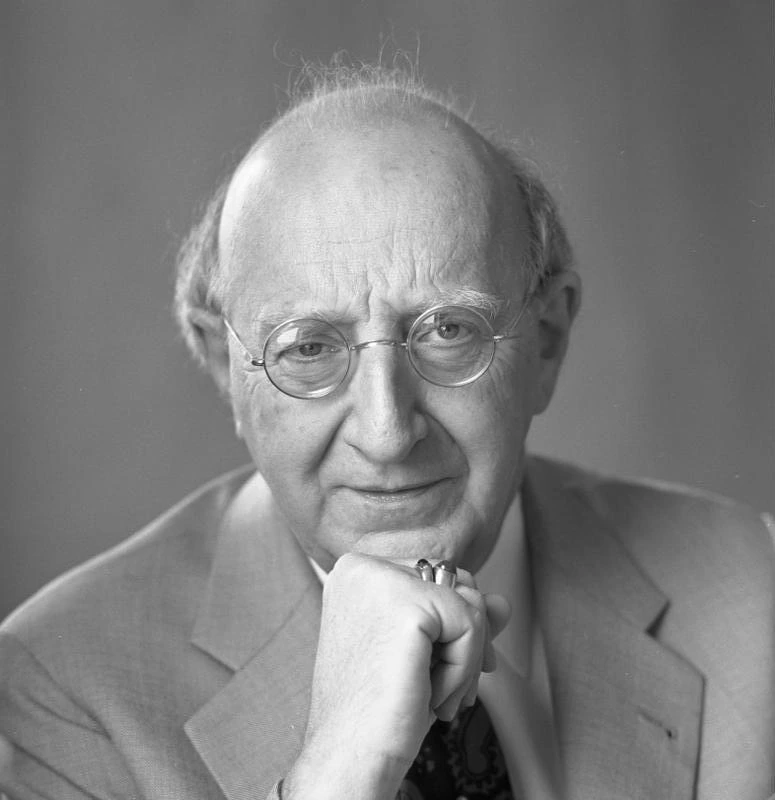
Who Prince Rupert Loewenstein was (and why people are still searching his net worth)

Prince Rupert Loewenstein (full name: Rupert zu Löwenstein-Wertheim-Freudenberg) was born on 24 August 1933 in Palma, Majorca, and died on 20 May 2014 in London, aged 80. He was a Spanish-born Bavarian aristocrat, a trained merchant banker, and, most famously in popular culture, the man who rescued the Rolling Stones from near-financial ruin and turned them into one of the most commercially successful touring operations in rock history. He managed their finances from 1968 to 2007, a run of 37 years that gave him a front-row seat to hundreds of millions of dollars in revenue.
People search his net worth for a few overlapping reasons: curiosity about whether managing rock royalty made him personally wealthy, interest in the intersection of old European aristocracy and modern entertainment finance, and the occasional confusion with other 'Rupert' figures in the Loewenstein/Löwenstein noble lineage. It is worth being clear: this article is about the 1933–2014 individual, not historical princes of the same dynastic house. The Wikipedia disambiguation page for Prince Rupert separates the 1933, 2014 Prince Rupert Loewenstein from other people and historical figures with similar names by using full name variants and lifespan details this article is about the 1933–2014 individual. UK Companies House records confirm his identity under the variant spelling 'Rupert Zu Loewenstein-Wertheim-Freudenberg,' listed as a director of Rupert Loewenstein Limited (company number 02246783), and US court records also reference 'Prince Rupert Loewenstein' by name, both useful anchors for disambiguation.
What 'net worth' actually means for someone like him
Net worth is simply what you own minus what you owe. For Prince Rupert, the key asset categories to think about are: accumulated investment capital from decades in banking and financial management, property (most notably Petersham Lodge in Richmond, which Wikipedia records he purchased for approximately £2 million in 1987, a property that would have appreciated significantly by 2014), equity or profit-sharing arrangements from his Rolling Stones advisory role, proceeds from his memoir 'A Prince Among Stones' (published 2013), and his stake or involvement in London family office Holbein Partners, where he held a founder/president-level role in his later years.
On the liabilities side, the picture is sparse in public records. There are no documented bankruptcies, major litigation losses, or distress signals. His aristocratic title carried prestige but not a large inherited estate in the modern British sense, the Löwenstein-Wertheim-Freudenberg family seat is in Germany, and Rupert's branch had been significantly displaced from large landholdings. So his wealth was largely self-built through professional fees, investment acumen, and smart positioning rather than inherited capital. That distinction matters when estimating a final number.
The best public sources for estimating his wealth

Because Loewenstein was a private financial adviser rather than a publicly traded company executive or celebrity who filed earnings disclosures, the sources are patchier than you might hope. Here are the most credible ones, ranked roughly by reliability:
- UK Companies House: Confirms the existence of Rupert Loewenstein Limited and his directorship. Some third-party company-check sites surface a 'net worth' figure for the entity, but that reflects company-level accounting data, not personal wealth — treat it as a partial signal only.
- Property records: The Petersham Lodge purchase at approximately £2 million in 1987 is documented in Wikipedia's entry for that property. Richmond property values roughly tripled or more between 1987 and 2014, suggesting the property alone could have been worth £6 million to £10 million or more at his death.
- Reputable press obituaries and profiles: The Guardian, the Financial Review (AFR), and major music press obituaries from May 2014 confirm his biography and career arc without publishing a specific net worth figure — but they provide the income context.
- His own memoir: 'A Prince Among Stones' (2013) contains firsthand narrative about his business arrangements with the Stones, offering the clearest public account of how his advisory role worked, though he deliberately avoids specific fee disclosures.
- Family Wealth Report (2013/2014): Documented his involvement with Holbein Partners, a London-based family office, confirming he was active in wealth management at the highest level until very close to his death.
- US court records (PACER/GovInfo): His name appears in federal court case filings, providing identity confirmation, though no wealth data is extractable from those records alone.
How to estimate net worth when the data is thin
When hard data is limited, the standard approach used by financial researchers is triangulation: combining multiple estimation methods and seeing where they converge. Here is how that works for Prince Rupert specifically.
Income-based estimation
A senior financial adviser managing a globally touring band of the Rolling Stones' stature would typically earn a retainer plus a percentage of deal value. Even a conservative assumption of 1 to 2 percent advisory fees on major transactions, spread across touring revenue, recording deals, licensing, and sponsorships accumulated over 37 years, points to cumulative earnings in the many millions of pounds. Add to that his merchant banking career before and during the Stones relationship, and a reasonable lifetime professional income could easily exceed £20 million in nominal terms.
Asset and property inference
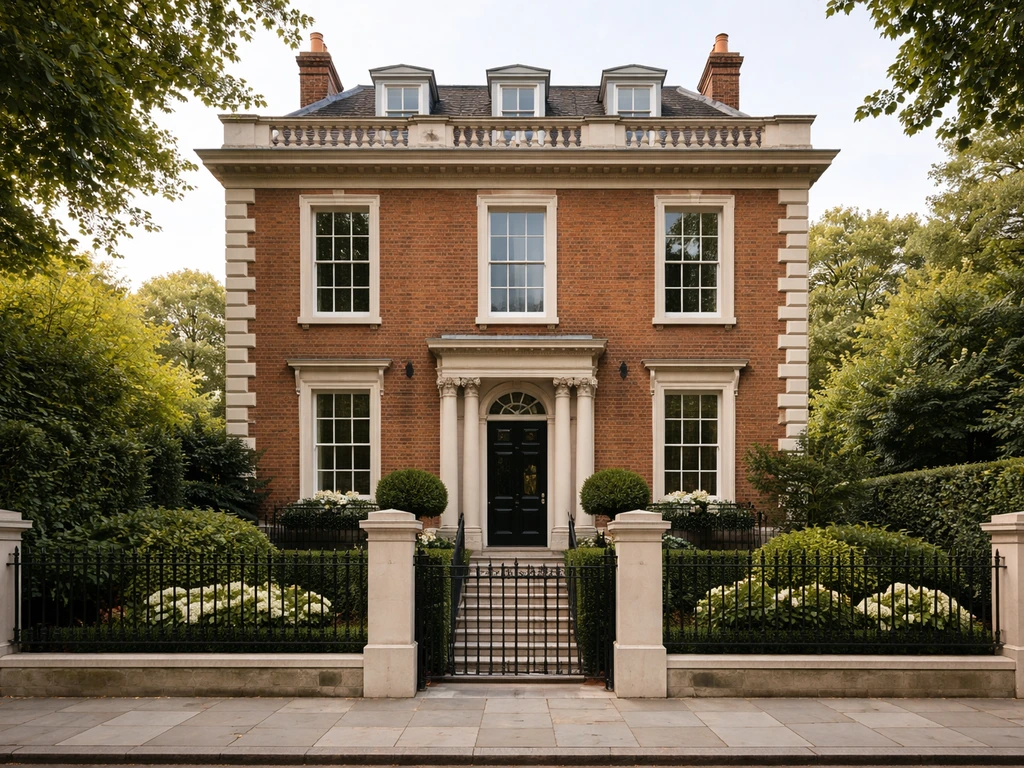
Petersham Lodge at £2 million in 1987 is the clearest documented asset anchor. UK house prices in the Richmond area roughly tripled between 1987 and 2014 at a minimum, putting that property's value at well above £6 million and plausibly closer to £10 million. Add investment capital, art, and other private holdings typical of someone at his wealth level, and the asset base looks substantial.
Comparable benchmarking
Peers in the high-net-worth London merchant banking and wealth management world, combined with a unique franchise like the Stones, typically retire with £20 million to £50 million in net assets. His profile sits toward the lower-to-middle of that range because his role was advisory rather than principal investing, he managed others' money more than he deployed his own capital at scale.
Triangulated estimate
Combining these three methods, income-based, property inference, and peer benchmarking, the estimate converges on a personal net worth of approximately £15 million to £30 million at the time of his death. The lower bound is supported by property alone plus modest accumulated savings; the upper bound reflects full advisory fee accumulation and investment growth. It would take an unlikely combination of high personal spending, large undisclosed liabilities, or failed investments to fall below £10 million, and there is no public evidence of any of those factors.
A wealth timeline: how his fortune built over decades

| Period | Career Milestone | Wealth Signal |
|---|---|---|
| 1963 | Joined consortium to buy merchant bank Leopold Joseph & Sons; became a director | Entry into professional finance; building institutional credibility |
| 1968 | Began managing the Rolling Stones' finances | Long-term advisory income stream established; deal-structuring fees begin |
| 1981 | Founded Rupert Loewenstein Limited (his own firm) | Business formalization; equity in his own advisory vehicle |
| 1987 | Purchased Petersham Lodge for approximately £2 million | Documented major property acquisition; wealth visible through real estate |
| 2007 | Stepped back from day-to-day Rolling Stones management after 37 years | Major income stream restructured or concluded; capital should have been accumulated by this point |
| 2013 | Published memoir 'A Prince Among Stones'; involved with Holbein Partners family office | Final career chapter: royalties, advisory income, and family office positioning |
| May 2014 | Died in London aged 80 | Estate enters probate; wealth transfers to heirs |
The 2007 departure from the Stones is a meaningful marker. After that point, his primary recurring income from that relationship ended, but by then he had more than three decades of accumulated fees and investments working for him. His late-career move into family office work through Holbein Partners shows he remained active in wealth management right up to his death, suggesting continued advisory income and investment activity rather than a passive retirement.
Comparable figures and context: where his wealth sits in the wider picture
To give the estimate some grounding, it helps to compare Loewenstein's position to similar figures. He is not in the same wealth bracket as Rupert Murdoch or other media moguls who built empires through principal ownership. If you are also comparing to a different kind of media wealth profile, see rupert murdaugh net worth for how principal ownership can change the numbers versus an adviser-style income model. His role was closer to a highly placed professional adviser, exceptionally well compensated, operating at the top of his industry, but not a principal shareholder in the businesses he advised. That nuance matters enormously for net worth.
Within the world of aristocratic wealth managers and private bankers operating in London, £15 to £30 million is a respectable but not extraordinary outcome. Peers who also built independent advisory or family office businesses in the same era often land in a similar range, unless they made significant principal investments alongside their advisory work. Rupert Hoogewerf (compiler of the Hurun Report on Chinese billionaires) and figures like him operate in wealth research rather than wealth management, which is a useful contrast, Loewenstein was actually inside the money flows, not just documenting them. Some readers also compare this kind of figure with what Rupert Hoogewerf’s net worth reportedly looks like, given his role in compiling elite wealth rankings.
How accurate is this estimate, and how can you verify it
There is no publicly filed probate record or estate disclosure from 2014 that has been widely reported, which means the core uncertainty in this estimate is genuine. What can be stated with confidence: he owned Petersham Lodge (documented), he ran his own company for decades (Companies House confirmed), he had a long-term relationship as a senior adviser to one of the world's most financially successful bands, and he was active in family office work until just before his death. What is speculative: the exact fee structure with the Stones, the size of his investment portfolio, and whether there were significant liabilities or family trust structures that complicate the picture.
If you want to cross-check or push further, the most productive routes are: searching UK probate registry records (publicly accessible at GOV.UK for deaths from 1996 onward) for any grant of probate linked to his estate, reviewing Companies House filings for Rupert Loewenstein Limited for any financial statements filed around or after 2014, and looking at property sale records for Petersham Lodge after 2014 via Land Registry data (available at HM Land Registry). Those three steps would either confirm or significantly refine the estimate. If a probate value was published, it would be the single most authoritative figure available.
The bottom line: treat £15 million to £30 million as the best-supported range with the public information available today. The lower end is defensible on property evidence alone; the upper end reflects a generous but plausible reading of decades of advisory income and investment growth. Any single source you find online claiming a precise number without sourcing those specific records should be treated with healthy skepticism, including ours, until those probate or Land Registry steps are taken. If you keep seeing a specific figure for rupert stadler net worth online, verify it against probate or other primary records rather than relying on unsourced claims.
FAQ
How can I verify Prince Rupert Loewenstein net worth using official records?
In the UK, the most direct way to validate an estimated net worth is to look for a grant of probate or an estate valuation published through the probate registry. If a probate figure is available, it is often the closest approximation to net assets, but note that probate values can exclude certain trusts or assets held in structures outside the estate, so you may need to interpret it in context.
What’s the best way to avoid mixing him up with other Loewenstein or Rupert figures?
Yes, confusion is common because there are multiple “Rupert” and “Löwenstein/Loewenstein” figures in public data. Always match full name variants and dates of death, and use the Companies House director listing for “Rupert Zu Loewenstein-Wertheim-Freudenberg” (plus the company number) to ensure you are tracking the correct 1933–2014 individual.
Does managing the Rolling Stones automatically mean Prince Rupert owned part of the band?
The Rolling Stones advisory role is often discussed as if it means ownership, but net worth is about what he personally owned and what he was owed, not what he helped manage. So you should treat compensation models (retainers, success fees, consulting percentages) as estimates for income that could have been saved or invested, rather than as evidence of equity stakes.
Why is Petersham Lodge used as an anchor, and what could make the final number materially higher or lower?
A single property value can anchor the estimate but it is not the whole picture. Petersham Lodge’s appreciation is a major reason the range is relatively high, yet net worth could be affected by mortgage history, renovation costs, timing of sales or transfers, and the existence of additional properties or concentrated portfolios.
What kinds of hidden factors would most change the £15 million to £30 million range?
The range includes a reasonable possibility of meaningful investment growth over decades, but it does not assume a billionaire-scale principal investing strategy. If you find evidence of large principal investments or corporate equity holdings, the upper bound could shift upward, while evidence of major debts, guarantees, or large family transfers could shift it downward.
How can Companies House filings refine the net worth estimate if no probate value is published?
If Companies House filings show turnover, profit, or directors’ remuneration for Rupert Loewenstein Limited, that can be used to sanity check the likely income level, even if it will not reveal his personal net assets. Look for financial statements close to and after 2014 to see whether the business was still operational and how expenses and income were reported.
What should I do if I cannot find probate for his estate?
If probate is missing or not easily found, you can still cross-check indirectly. Compare property records for Petersham Lodge (and any other named properties), review UK director history across related entities, and look for any published family office documentation that indicates his exact ownership or role type. Absence of evidence for liabilities can increase confidence, but it cannot replace a probate number.
How can I assess whether an online claim of Prince Rupert Loewenstein net worth is credible?
When people cite precise figures online, the easiest skepticism test is whether they can point to the specific record type that would support a number (probate value, audited financial statements, or clearly documented asset sales). If the claim is not tied to those primary documents, treat it as speculation, especially for private individuals whose wealth was not disclosed publicly.
Next Article
Rupert Hoogewerf Net Worth: Estimate, Sources, and Method
Evidence-based estimate of Rupert Hoogewerf net worth, sources used, how it is calculated, and why ranges differ over ti